RSS

2025: The Year of Breathing Room

If I had to give 2025 a label in Victoria real estate, this would be it: the year of breathing room.

Not a boom. Not a bust. And definitely not a return to the frenzy years people still talk about over coffee. Instead, 2025 was a year where the market slowed down just enough for decisions to be made with a bit more clarity. Buyers had time to think. Sellers had to be more intentional. And outcomes depended far more on pricing, condition, and expectations than on luck or timing.

By the end of this post, you should have a good sense of what actually drove the Victoria market in 2025, where demand truly came from, and what that means heading into 2026.


The big picture: steady prices, selective buyers

Looking at Greater Victoria as a whole, pricing held up better than many expected. Single family homes finished the year with an average sale price just over $1.3M, modestly higher than 2024. Condos and townhomes followed a similar pattern. Flat to slightly up, but without the sharp swings we saw earlier in the decade.

That stability, however, came with a clear trade-off: buyers were far more selective.

Homes that were well priced and well presented sold. Homes that were not sat longer, invited negotiation, or simply missed the moment. This was especially true in the middle of the market, where buyers had more choice than they’ve had in years.


Sales activity picked up, but confidence stayed cautious

Total sales volumes improved year-over-year, particularly for single family homes. That tells us something important. People were still moving. Life events did not stop. But the mindset had changed.

What I saw repeatedly was this:

  • Buyers came prepared, but not rushed.

  • Conditions were common again.

  • Price reductions were part of the process, not a failure.

This wasn’t hesitation. It was measured decision-making, and that tone defined much of the year.


Victoria is still a local market, and the data proves it

One of the most telling pieces of data in the 2025 annual reports is buyer origin.

More than 91% of all buyers lived in British Columbia, and nearly 76% were already in Greater Victoria. Buyers from elsewhere in Canada made up just over 7%, while international buyers accounted for less than 2%.

Even when we look only at out-of-town buyers, the story stays local:

  • About 64% were still from BC

  • Roughly 29% came from elsewhere in Canada

  • Less than 7% were from outside the country

This matters because it reinforces a long-standing truth about Victoria real estate. This market is driven by people who already live here or already plan to live here. Lifestyle, work, family, and long-term roots continue to outweigh speculation or global capital flows.


Micro-markets mattered more than headlines

If you zoom into individual municipalities, 2025 becomes even more interesting.

Oak Bay, North Saanich, and parts of Saanich East continued to command premium pricing, while Langford and Sooke delivered higher volumes at more attainable price points. Condos in the core remained active, particularly for buyers prioritizing walkability and simplicity over space.

What changed in 2025 was how forgiving the market was not.

Layout, condition, parking, strata health, street noise, and renovation quality all mattered more than they did a few years ago. The gap between a great property and an average one widened, even when headline prices appeared stable.


Interest rates helped, but psychology mattered more

From a national perspective, interest rates eased during 2025, and that certainly helped bring some buyers back into the conversation. But lower rates did not automatically translate into aggressive behaviour.

Many buyers remained cautious, shaped by the volatility of the last few years. Sellers, meanwhile, sometimes expected rate cuts to reignite urgency that simply wasn’t there.

The result was a market that worked best for people who aligned their expectations with reality, rather than betting on sentiment alone.


International and national influences stayed in the background

Despite plenty of global headlines, international buyers remained a very small part of the Victoria market in 2025. Less than 2% of all purchases came from outside Canada.

National housing conversations around supply, affordability, and policy set the tone, but they did not drive day-to-day outcomes here. In practice, Victoria behaved like it usually does: locally influenced, lifestyle driven, and resistant to sudden swings.


What 2025 rewarded, and what it punished

2025 rewarded:

  • Realistic pricing from the start

  • Homes that were clean, bright, and well maintained

  • Sellers who understood buyer trade-offs

2025 punished:

  • “Testing the market” pricing

  • Deferred maintenance without price adjustment

  • Assuming demand would overcome condition

This isn’t right for everyone, but for many sellers the choice was clear: price well and stay in control, or price high and let the market decide for you.


Looking ahead to 2026

If 2025 was the year of breathing room, 2026 will likely be the year where confidence decides direction.

I’m watching:

  • Inventory levels

  • Time on market

  • Buyer decisiveness, not just rates

  • Continued divergence between property quality and outcomes

The market doesn’t need drama to be healthy. A year like 2025 can be a gift if you use it properly.

If you’re thinking about a move in 2026, or just trying to understand how these patterns apply to your specific neighbourhood or home type, I’m always happy to talk it through. No pressure. Just a clear conversation about options and trade-offs.

Read

The 2026 BC Assessment Is Out. Here’s What It All Means For You

Every January, the BC Assessment notice lands in mailboxes and inboxes across Greater Victoria. And almost every year, the same question comes up.

“What does this actually mean?”

If you take only one thing from this post, let it be this. A BC Assessment is a reference point, not a verdict. It is useful, imperfect, and often misunderstood. By the end of this, you should understand what the 2026 assessment represents, what it does and does not tell you, and when it deserves a closer look.


What BC Assessment is really measuring

BC Assessment provides an estimated market value for every property in the province once a year.

The important detail that often gets missed is the valuation date.

Your 2026 assessment is based on market data as of July 1, 2025.

That means:

  • It reflects what comparable homes were selling for roughly six months ago

  • It does not reflect what has happened since late summer or fall

  • It is already out of date the moment you receive it in January

This timing is deliberate. BC Assessment needs a fixed date to evaluate hundreds of thousands of properties consistently. But it also means the number you see is a snapshot, not a live market read.

This is why assessments often feel confusing when markets are shifting.


Why your value may look higher or lower than expected

Assessments are built using mass appraisal models. They rely heavily on comparable sales, location, property type, size, and age. They are good at trends. They are less precise at individual nuance.

A few reasons your assessment may surprise you:

  • Your neighbourhood had strong sales activity before July

  • Your property type moved differently than the broader market

  • Renovations, condition issues, or layout quirks are not fully captured

  • Your home is being compared to sales that are technically similar, but practically different

This does not automatically mean the assessment is wrong. It means it deserves context.


How assessments relate to property taxes, briefly and calmly

This is where stress tends to creep in, so let’s slow it down.

Your assessment does not directly set your taxes.

Municipalities first decide how much money they need to raise. That decision drives tax increases far more than assessment values do. The mill rate is then adjusted so the total budget is collected.

Your assessment mainly determines your share of that total, relative to other properties.

In practical terms:

  • If most properties in your community rose by a similar percentage, your relative position may not change much

  • If your assessment rose more than the community average, you may shoulder a slightly larger share

  • If it rose less, you may carry a smaller share

The assessment influences distribution. Municipal budgets influence the outcome.

That distinction matters.


Why comparing year over year is not enough

One of the most common mistakes I see is focusing only on the change from last year.

What actually matters more is:

  • How your value compares to similar homes

  • How your increase compares to the average change in your municipality or property class

A ten percent increase means very different things depending on what happened around you.

This is why two neighbours can see similar assessments and experience very different tax outcomes.


When it makes sense to question an assessment

Most assessments are broadly reasonable. Some are not.

Situations where it is worth slowing down and looking closer include:

  • Your assessment is clearly above comparable sales from around July 1, 2025

  • Similar homes or strata units show inconsistent values

  • The assessment assumes features or condition your home does not have

  • Your increase significantly outpaced the surrounding area

Situations where it usually does not help:

  • Arguing based on today’s market

  • Pointing to renovation costs

  • Comparing to listing prices rather than completed sales

Assessment reviews are evidence-driven. Data wins. Opinions do not.


How the review and appeal process works

The process is more structured and less dramatic than many people expect.

At a high level:

  1. Review the details
    Confirm square footage, classification, age, and lot size.

  2. Look at true comparables
    Focus on similar properties that sold close to the July 1 valuation date.

  3. Decide whether it is worth pursuing
    Not every difference justifies the time or effort.

  4. File a complaint if warranted
    Many issues are resolved through discussion once the data is reviewed.

The key decision is not how upset you feel when you open the notice. It is whether the numbers hold up when calmly examined.


A quick real-world perspective

I often see two very different reactions.

In some cases, the assessment looks high, but once we compare it to similar sales from last summer, it lines up reasonably well. No action needed.

In other cases, especially with strata properties, values within the same building can drift apart without a clear reason. Those are worth flagging.

Same system. Same year. Different conclusions.


How I suggest homeowners use their assessment

Think of your BC Assessment as a conversation starter, not a final answer.

It can help you:

  • Understand how your property fits within your local market

  • Spot inconsistencies or red flags

  • Ask better questions about value, taxes, or future plans

It should not be the sole basis for financial decisions, pricing a home for sale, or assuming what your tax bill will be.


If you want a second set of eyes

If you are unsure how your assessment stacks up, I am happy to walk through it with you.

Sometimes that conversation ends with, “This looks fine.” Other times it leads to a deeper review or a formal challenge. Both outcomes are useful.

The goal is not to fight the system. It is to understand it well enough to know when action makes sense, and when it does not.

If this is on your mind, feel free to reach out. I am always happy to talk it through.

Read

BoC Holds Rates. What It Means for Greater Victoria Buyers and Sellers

The Bank of Canada held its overnight rate steady today at 2.25%. That means the cycle of rate cuts or hikes is on pause for now. It gives buyers, sellers, and homeowners a little breathing room to plan ahead.

Why the hold?

The Bank noted persistent uncertainty around global trade and rising tariffs, which continue to weigh on business investment and exports. At the same time, inflation and domestic demand are behaving in a way that makes the current rate about right. Inflation is near target, and the economy appears more resilient than many expected.

What this means for mortgages

Variable rate mortgages remain tied to prime. With the overnight rate at 2.25%, variable rate borrowers should not see big surprises, although lenders may become more cautious in future pricing.
Fixed rate mortgage costs depend more on bond yields. Recent shifts in bond markets mean fixed rates may trend upward even if the overnight rate holds steady.

If you are renewing a five year fixed mortgage or locking in a new one, it may be a good time to compare lenders and secure a rate, especially if you expect rates to drift higher later in the year.

What it means for buyers

For prospective buyers in Greater Victoria, this period of rate stability offers a window of predictability.
You can budget with more confidence, even if rates do not fall dramatically.
It is a chance to focus on finding the right home, neighbourhood, and financing plan, rather than rushing due to rate anxiety.
With the broader market showing signs of balance, you may have more choice and more time to weigh options.

What it means for sellers

For sellers, the picture remains steady but cautious.
With rates stable, buyers will not face sudden jumps in financing costs.
If fixed rate yields continue to rise, housing costs could inch upward and weigh on demand.
Clean presentation, realistic pricing, and thoughtful marketing will continue to matter. Homes that are well positioned and competitively priced will perform best.

My take as your local Realtor

This rate hold feels more like a pause button than a reset. The Bank of Canada is threading a narrow path. It is managing inflation while trying not to stifle growth during global trade uncertainty. From where I sit, that leads to a market that feels balanced rather than overheated. A steady lane, not a fast lane.

If you are thinking about buying, selling, or renewing a mortgage in 2026, now is a good time to look at your options with some clarity. I am always glad to walk you through how this announcement may shape your plans.

BOOK A CALL

Read

Victoria’s Market in November. A Slower Pace and a Clearer Picture for 2026

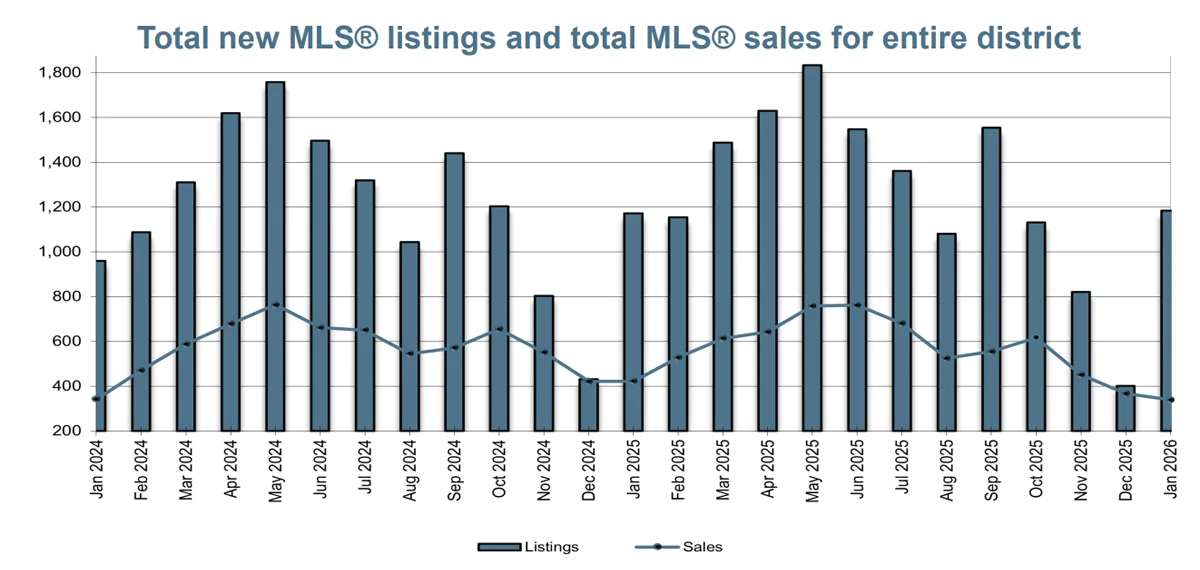
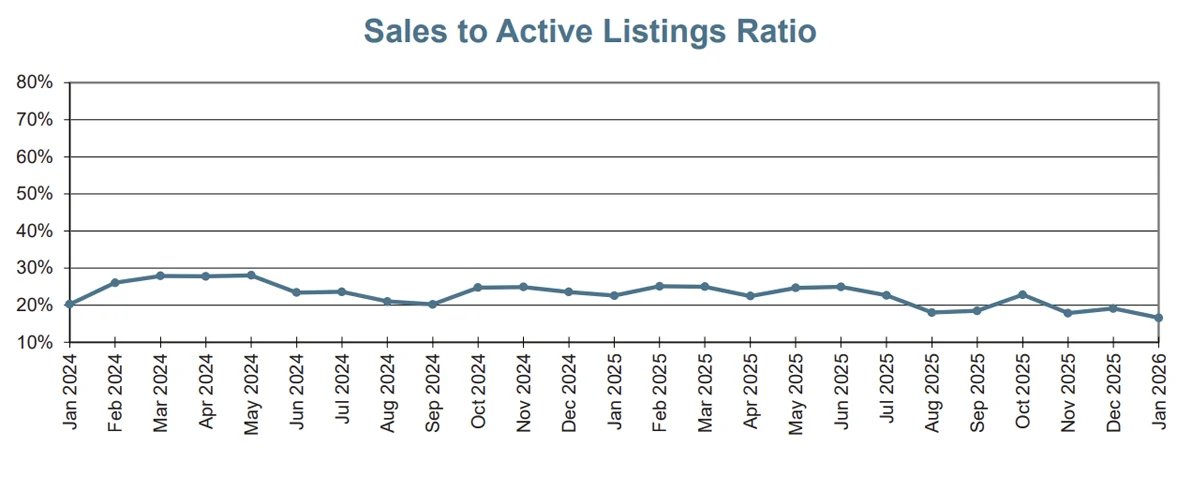
November’s numbers from the Victoria Real Estate Board confirmed what most of us have been sensing. The market has shifted into a slower, more balanced gear.

Sales have cooled, not crashed

VREB reported 451 sales in November. That is about 18% fewer than last year and roughly 27% below October. Condos felt the slowdown most sharply, with 119 sales, close to a one third drop year over year. Single family homes were down about 8%, with 241 sales across the region.

In plain language, buyers have choices again. The urgent, offer tonight or lose it energy of the early 2020s has largely faded.

Inventory is up and buyers can breathe again

We ended November with 3,152 active listings. That is almost 8% fewer than October, but 11% more than a year ago. More inventory than last year, paired with fewer sales this month, is classic balanced market territory. Well priced and well presented homes are still selling, but both sides have more time to think and negotiate.

Prices. Detached easing, condos edging up

Using the MLS Home Price Index:

The benchmark single family home in the Victoria Core sat at $1,276,700. That is down about 2.8% from last November and slightly below October.
The benchmark condo in the Victoria Core reached $553,100. That is roughly 2% higher than a year ago and modestly up from October.

Detached prices have eased from their peak. Condos are proving more resilient, shaped by affordability pressures and steady demand from first time buyers and downsizers.

How this lines up with the 2026 outlook

National and provincial forecasts point in a similar direction.

  • CMHC expects a gradual recovery in 2026 as conditions stabilize and rates moderate.

  • CREA based forecasts point to a small price decline through 2025 and a modest national increase of about 3% in 2026.

  • BC focused outlooks call for softer sales in 2025 and an upswing in 2026 as buyers adjust to today’s interest rate environment.

For Greater Victoria, this likely means balanced conditions rather than a runaway seller’s market. Prices that move sideways to slightly higher. Strength in pockets where supply is tight. Ongoing affordability pressure, especially for younger buyers.

If you are buying in 2026

Buyers will find more inventory than we have seen in years. Less competition. More time for due diligence. You can focus on fit. Neighbourhood, layout, long term needs. The trade off is that rates remain higher than in the 2015 to 2020 era, so careful budgeting matters.

If you are selling in 2026

The bar is simply higher. Buyers have options, so pricing must be strategic, not nostalgic. Clean presentation and thoughtful prep still make a measurable difference. Realistic expectations matter. The goal is to be one of the next homes to sell, not another listing sitting in the queue. Well positioned homes continue to achieve solid prices. The any condition, any price days are behind us for now.

My take from the ground

This patient but active market is healthier for everyone. Buyers can think clearly. Sellers who prepare are rewarded. The gap between list price and true value is narrowing. If you are wondering whether to upsize, downsize, or shift within Greater Victoria in 2026, the answer is rarely a simple yes or no. It comes down to timing, product, and financing.

Let’s talk about your 2026 move

If you’d like a data driven look at what your current home could realistically sell for in this market, or which neighbourhoods fit your budget and lifestyle for a 2026 purchase, reach out any time. I am happy to walk you through the numbers, not just the headlines.

BOOK A CALL

Read
MLS® property information is provided under copyright© by the Vancouver Island Real Estate Board and Victoria Real Estate Board. The information is from sources deemed reliable, but should not be relied upon without independent verification.